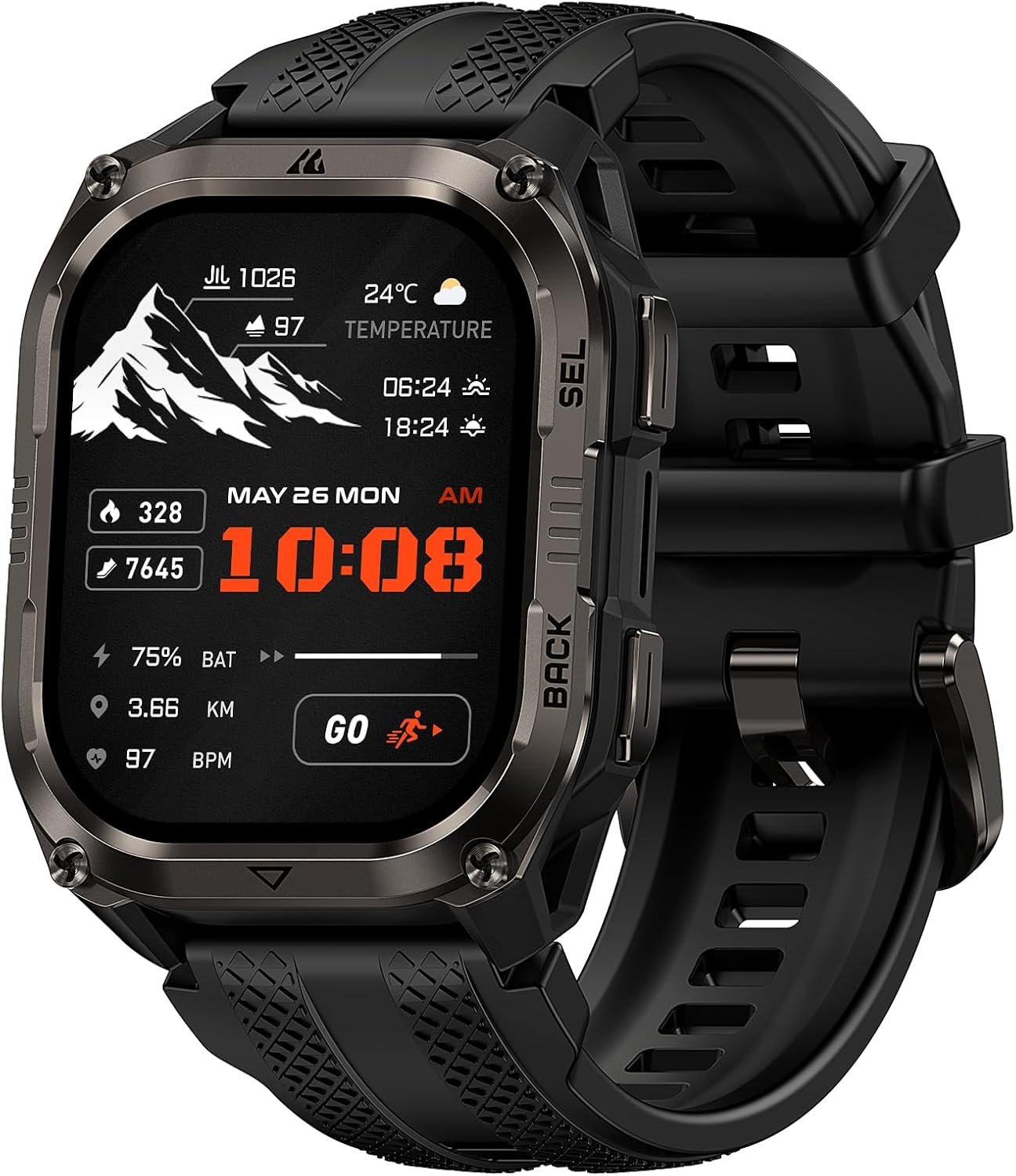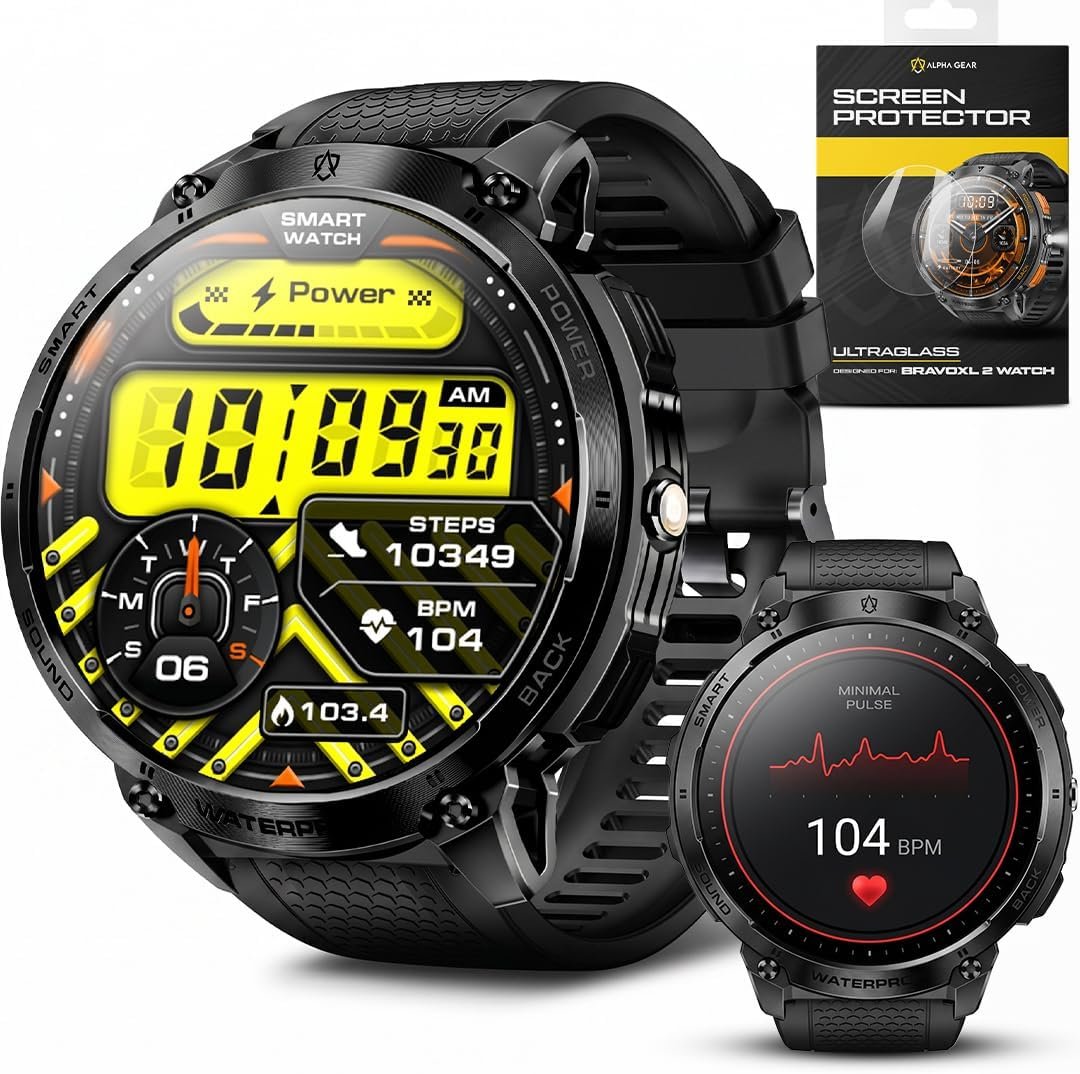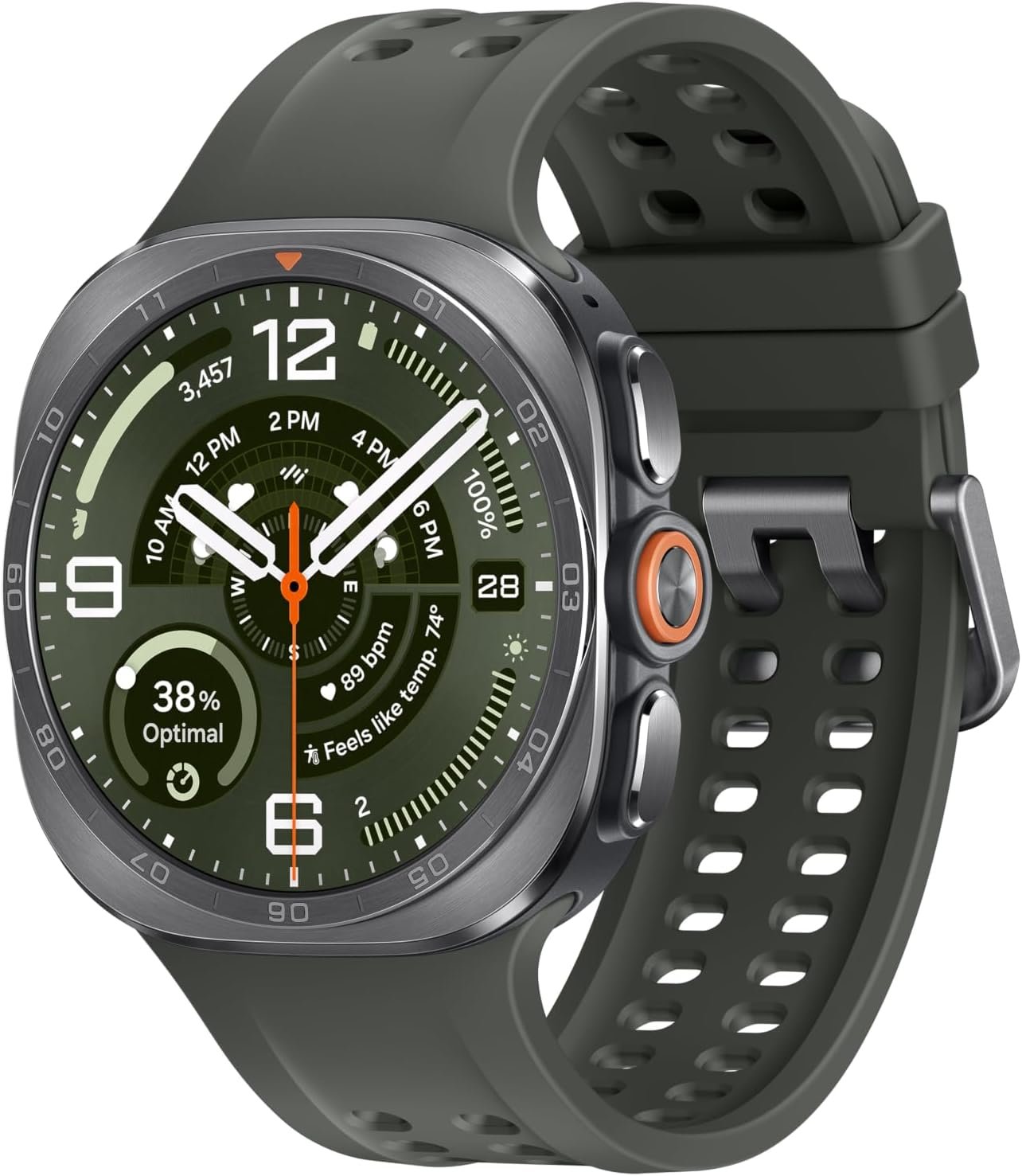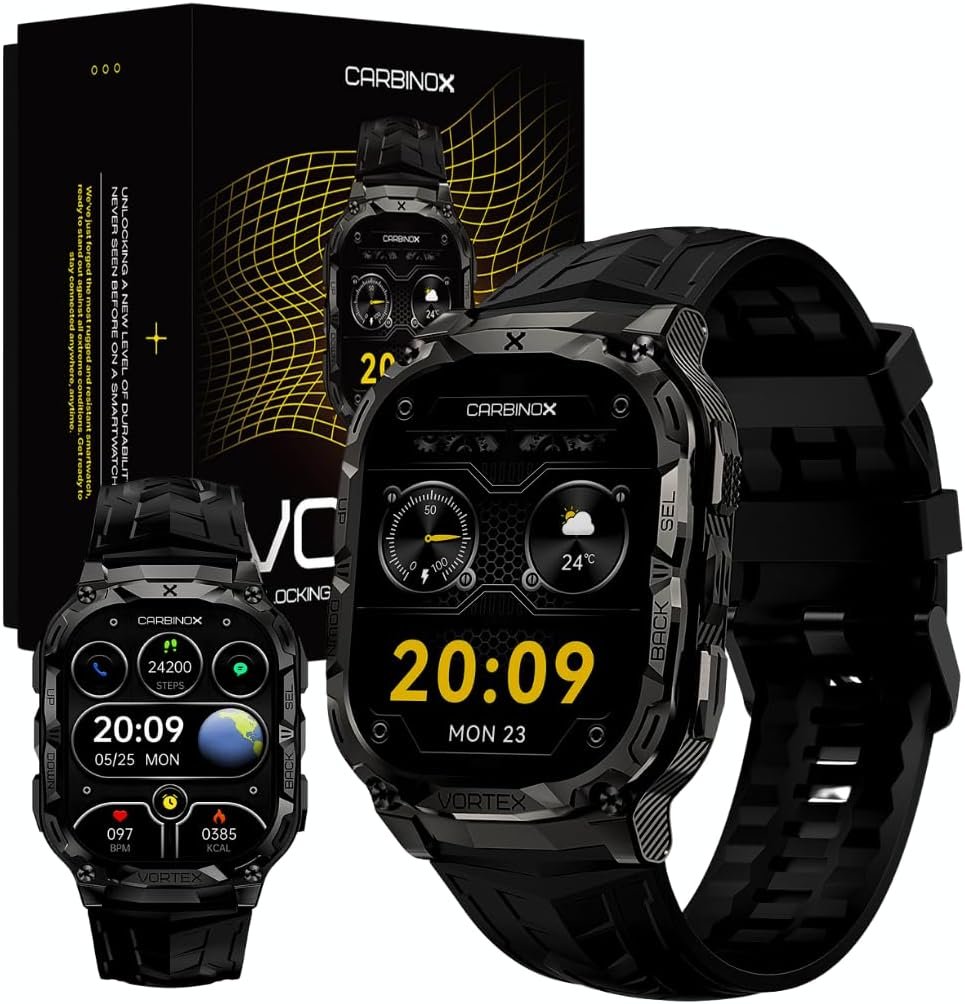
Smartwatches have developed into practical everyday tools that combine timekeeping, activity tracking, notifications, and smartphone connectivity in a single wearable device. For people who spend time outdoors, exercise regularly, or simply prefer a watch designed around a more rugged style, a conventional lightweight smartwatch may not always match their needs. Rugged-oriented models are generally designed around durability, outdoor activities, and practical fitness features.
The CARBINOX Vortex Rugged Smart Watch for Men is a fitness-focused smartwatch designed around that type of use. Its positioning combines a rugged appearance with smartwatch and fitness-tracking functions, making it relevant to users interested in outdoor activities, exercise monitoring, and connected everyday wear.
A product like this can serve several purposes during the day. It can be used as a watch, an activity tracker, a notification companion, or a convenient way to keep track of selected fitness information without constantly taking a smartphone out of a pocket. For outdoor-oriented users, the physical design is also part of the appeal, particularly when a watch needs to fit into an active lifestyle.
At the same time, understanding what a rugged smartwatch can and cannot do is important. Fitness measurements from consumer wearables are generally intended for wellness and activity tracking rather than medical diagnosis. Water-resistance terminology can also be misunderstood, and smartwatch features often depend on smartphone compatibility, software, Bluetooth connectivity, and the companion application.
This guide explains the main characteristics and practical uses of the CARBINOX Vortex, along with considerations that can help users determine whether this type of smartwatch fits their routine.
Understanding the CARBINOX Vortex Concept
The CARBINOX Vortex is positioned as a rugged smartwatch and fitness tracker for men, with an emphasis on active and outdoor-oriented use. Rather than functioning only as a traditional watch, a smartwatch in this category combines several functions into one wearable platform.
The rugged concept is particularly relevant for people whose routines include activities such as walking, hiking, cycling, outdoor workouts, travel, or other situations where a conventional dress-oriented watch may not be the preferred choice.
The watch can also be useful in ordinary settings. A rugged design does not necessarily mean that the device has to be used exclusively for demanding outdoor activities. Many people prefer watches with a more substantial appearance for everyday wear, including at work, while commuting, or during casual activities.
The fitness-tracking aspect adds another layer of functionality. Instead of relying entirely on a smartphone for basic activity information, users can have selected measurements available directly from the wrist.
That can make a smartwatch convenient for people who want a more continuous view of their daily activity without turning fitness tracking into a complicated process.
Key Features and Functions
Rugged-Oriented Design
One of the defining characteristics of the CARBINOX Vortex is its rugged smartwatch positioning.
A rugged watch typically emphasizes a more substantial physical design than minimalist fitness bands. This type of construction can appeal to users who prefer equipment that visually matches outdoor clothing, workwear, hiking gear, or an active lifestyle.
The design also has a practical purpose. Outdoor users may prefer a larger, easier-to-read watch interface and a physical structure that feels appropriate for activities outside the home.
However, rugged styling should not automatically be interpreted as indestructible construction. No consumer electronic device is immune to impact, moisture, extreme temperatures, or physical damage. The manufacturer’s operating and care recommendations should always take precedence.
Fitness Tracking
Fitness tracking is another central part of the Vortex concept.
A fitness tracker can provide information that helps users understand their activity patterns over time. Depending on the specific software and supported functions, wearable fitness systems may track areas such as steps, activity duration, exercise sessions, and other wellness-oriented metrics.
The greatest value of this information often comes from observing patterns rather than focusing on one individual reading.
For example, someone trying to become more active may find it useful to compare their activity on different days. A person who normally spends much of the day sitting can use activity information as a reminder to introduce more movement into their routine.
Fitness tracking can also help users establish practical goals. Instead of approaching exercise as an occasional event, activity data can encourage a more consistent approach.
Smartwatch Connectivity
The smartwatch category is defined partly by connectivity with a smartphone.
Rather than functioning only as a timekeeping device, a connected watch can provide selected information from a paired phone. Depending on the supported operating system, application, and permissions, this can include notifications and other connected features.
This can be particularly convenient when exercising or traveling.
For example, if a phone is inside a backpack or pocket, checking a notification from the wrist can be easier than stopping to take the phone out.
Connectivity can also make the watch part of a broader personal technology ecosystem. Instead of treating the watch as an isolated device, users can incorporate it into their existing smartphone routine.
Before purchasing any connected smartwatch, however, compatibility should be checked carefully. Smartphone operating-system requirements, Bluetooth versions, companion applications, permissions, and feature availability can affect the experience.
Outdoor and Active-Lifestyle Orientation
The rugged design makes the Vortex relevant to outdoor-oriented routines.
Activities such as hiking, walking, camping, cycling, and outdoor fitness can benefit from having a wearable device available on the wrist. The convenience comes partly from not needing to constantly handle a smartphone.
A smartwatch can provide information at a glance while the user is moving.
For example, during a walk, a user may want to check elapsed activity information without interrupting the activity. During travel, the watch can also function as a convenient timekeeping and notification device.
The actual suitability for a particular outdoor activity depends on the watch’s supported features and operating limitations, so users should distinguish between general outdoor fitness use and specialized equipment designed for particular sports.
How the CARBINOX Vortex Can Be Used
Everyday Activity Monitoring
One of the simplest applications is daily activity tracking.
A person does not need to participate in organized sports to benefit from activity information. Walking around the workplace, taking stairs, completing household tasks, or going for an evening walk all contribute to daily movement.
A wearable tracker can make these activities more visible.
Over time, users can look for patterns rather than treating individual numbers as absolute measures. A particularly active day may be interesting, but the more useful question is often whether activity levels are becoming more consistent over several weeks.
Walking and Outdoor Exercise
Walking is one of the most accessible forms of exercise, and a smartwatch can make it easier to monitor a walking routine.
A user might wear the Vortex during a morning walk, lunch break, evening walk, or weekend outing. Having the device on the wrist means activity-related information remains accessible without relying exclusively on a phone.
For someone building a new exercise habit, this can also create a simple feedback loop:
- Set a realistic activity objective.
- Wear the watch consistently.
- Review activity information.
- Identify patterns.
- Adjust the routine gradually.
This approach is generally more useful than trying to make dramatic changes based on a single day’s data.
Hiking and Outdoor Adventures
Rugged-style smartwatches are particularly relevant to hiking and similar activities.
When walking on trails, users may prefer having a wearable device rather than frequently reaching for a smartphone. The watch can become part of the outdoor gear carried during the trip.
However, hikers should not assume that a fitness smartwatch replaces dedicated navigation equipment.
For longer or more remote trips, smartphones, dedicated GPS devices, maps, backup power, communication equipment, and appropriate safety equipment may still be necessary.
A smartwatch should be considered one component of an outdoor setup rather than the entire safety system.
Cycling
Cyclists may also find a wrist-based activity tracker useful.
During a casual cycling session, the watch can provide a convenient way to record or monitor activity without requiring the rider to constantly interact with a phone.
For serious cycling, however, specialized cycling computers may offer features specifically designed around cycling performance, navigation, cadence, power measurement, and other advanced requirements.
The Vortex is therefore better understood as part of a general fitness ecosystem rather than automatically replacing specialized equipment.
Gym Workouts
A rugged smartwatch can also be used indoors.
Strength training, cardio workouts, circuits, and general gym sessions can all fit naturally into a wearable-tracking routine.
One advantage of wearing a smartwatch during exercise is consistency. If the watch remains on the wrist throughout the day, activity information can be gathered across different parts of the routine instead of requiring separate devices.
During strength training, users should also consider the physical environment. Contact with metal equipment, benches, weights, and other gym equipment can potentially cause scratches or impacts. A rugged appearance does not eliminate the need for reasonable care.
Travel
Travel is another practical use case.
A smartwatch can provide a convenient time display, activity tracking, and smartphone-connected information while moving through airports, cities, hotels, and outdoor destinations.
During a long travel day, activity tracking can be particularly interesting because walking through terminals, sightseeing, and exploring a new city can generate substantially more movement than an ordinary day at home.
A connected watch can also reduce the need to constantly hold a phone when checking simple information.
Who May Find This Type of Smartwatch Useful?
People With Active Daily Routines
Someone who spends a significant amount of time walking, exercising, commuting, or working outdoors may appreciate having fitness and smartwatch functions available from the wrist.
The rugged design can also fit an active wardrobe and lifestyle.
Outdoor Enthusiasts
Hikers, campers, walkers, and recreational cyclists may be interested in a watch designed with outdoor use in mind.
The important distinction is that recreational outdoor use and professional navigation are not necessarily the same thing. Users should select equipment according to the demands of their activities.
Users Moving From a Traditional Watch to a Smartwatch
Someone accustomed to wearing a traditional watch may prefer a smartwatch that retains a substantial, watch-like presence rather than adopting the appearance of a very small fitness band.
The Vortex’s rugged orientation can make the transition feel more natural for users who prefer larger or more noticeable wristwear.
Fitness Beginners
Fitness tracking does not have to be limited to experienced athletes.
For beginners, simple activity information can provide a way to understand how much movement occurs during a normal day. It can also make gradual lifestyle changes easier to observe.
The most useful approach is to treat tracking information as guidance rather than as a judgment about fitness.
Important Things to Consider Before Using a Rugged Smartwatch
Fitness Data Is Not Medical Data
Smartwatches can provide useful wellness information, but consumer wearable measurements should not automatically be interpreted as medical measurements.
Factors such as device position, movement, skin contact, exercise intensity, environmental conditions, and individual differences can influence readings.
If a person has a medical concern, symptoms, or needs clinically accurate measurements, a qualified healthcare professional and appropriate medical equipment should be used.
Wearable data can support general awareness, but it should not be used as a substitute for professional diagnosis.
Water Resistance Requires Careful Interpretation
Terms such as waterproof, water resistant, or activity-specific resistance can be misunderstood.
Even when a smartwatch is designed to tolerate exposure to water, users should not assume that every type of water exposure is appropriate.
Swimming, showering, high-pressure water, hot water, salt water, chemicals, and prolonged immersion can place different demands on seals and materials.
The manufacturer’s water-resistance instructions should therefore be followed closely.
Water resistance can also change over time due to aging, impact, wear, or damage to seals.
Smartphone Compatibility Matters
A smartwatch is only as useful as its connection to the devices and software it supports.
Before setting up the Vortex, users should verify that their smartphone meets the required operating-system specifications and that the necessary companion application is available for their device.
Bluetooth connectivity can also vary depending on distance, obstacles, interference, and the environment.
A watch that is designed to work with a smartphone should not automatically be assumed to provide every feature independently when the phone is unavailable.
Battery Life Depends on Usage
Battery claims for smartwatches are generally based on particular testing conditions.
Actual battery life can vary according to screen brightness, notification frequency, Bluetooth use, workout tracking, GPS activity when available, sensor usage, software behavior, and other settings.
Someone who frequently uses power-intensive features should expect different battery performance from someone who mainly uses the watch for timekeeping and occasional activity tracking.
Developing a practical charging routine can prevent interruptions.
GPS Is Not the Same as a Perfect Location System
If the particular configuration supports GPS-based activity tracking, users should understand that satellite positioning can be affected by the surrounding environment.
Buildings, dense trees, mountains, tunnels, atmospheric conditions, and satellite visibility can influence positioning.
Outdoor GPS technology is useful for many activities, but it should not be treated as infallible navigation equipment.
For remote hiking or safety-critical travel, carrying appropriate backup navigation and communication equipment remains important.
The Watch Needs Proper Fit
Wearable sensors generally require appropriate contact with the skin.
A strap that is excessively loose may move around and reduce consistency, while wearing a watch unnecessarily tight can cause discomfort.
The ideal fit depends on the activity and the user’s wrist.
During exercise, the watch should remain stable without creating excessive pressure.
Regular cleaning of the watch and strap can also improve comfort, particularly when the device is worn during workouts.
Comparing General Smartwatch Categories
There are several different types of wearable devices, and each serves a somewhat different purpose.
Rugged Smartwatch vs. Fitness Band
Fitness bands are usually smaller and lighter. They can be convenient for users who primarily want basic activity tracking and a discreet wearable.
A rugged smartwatch generally places more emphasis on a substantial watch design and broader smartwatch functionality.
The choice depends on whether the user prioritizes minimal size or a more substantial wearable platform.
Rugged Smartwatch vs. Traditional Watch
A traditional watch focuses primarily on timekeeping and may offer exceptional simplicity.
A smartwatch adds digital functions such as notifications, activity tracking, connected applications, and other features.
The trade-off is that a smartwatch requires charging and software support, whereas a traditional watch can often operate without a smartphone or charging routine.
Rugged Smartwatch vs. Dedicated GPS Watch
Dedicated GPS sports watches are designed around specialized athletic and outdoor functions.
They may provide deeper training analysis, navigation tools, sport-specific metrics, mapping, and longer-term performance features depending on the model.
A rugged general-purpose smartwatch can be more suitable for someone who wants fitness tracking combined with everyday smartwatch functionality rather than a specialized training platform.
Rugged Smartwatch vs. Smartphone Fitness Apps
A smartphone can already track certain activities using applications and built-in sensors.
The advantage of a wearable is accessibility. The device remains on the wrist during activity and can provide information without requiring the user to hold a phone.
For someone who already carries a smartphone everywhere, the smartwatch adds convenience rather than necessarily replacing the phone.
Setting Up a Smartwatch for Everyday Use
A sensible setup process can make the device easier to use.
Start by charging the watch according to the manufacturer’s instructions. Install the appropriate companion application on the compatible smartphone if required, then follow the pairing process.
After connecting the watch, review notification permissions.
Not every phone notification needs to appear on the wrist. Limiting notifications to useful categories can reduce distractions and preserve battery life.
Fitness settings should also be configured realistically. If the device supports activity goals, starting with achievable targets can make the tracking system more useful.
Users should also become familiar with basic functions before taking the watch on a longer outdoor trip.
Knowing how to access important screens, check battery status, manage connectivity, and adjust settings is much easier at home than during a hike or travel day.
Making Fitness Tracking More Useful
A wearable device becomes more valuable when its data is interpreted consistently.
Instead of checking numbers repeatedly throughout the day, users can establish a simple review routine.
For example, someone might look at overall activity at the end of each day and compare weekly patterns. If activity is consistently low, they could introduce short walks into the schedule.
If workouts are already part of the routine, the watch can serve as a record of activity rather than the sole measure of progress.
Other factors matter too. Sleep, nutrition, recovery, exercise quality, stress, and personal circumstances can all influence how a person feels and performs.
Fitness data is most useful when combined with broader awareness of the body and lifestyle.
Care and Maintenance
Even rugged-oriented electronics benefit from routine care.
After exercise, wiping away sweat and moisture can help maintain comfort and cleanliness. If the watch is exposed to dirt or outdoor debris, it should be cleaned according to the manufacturer’s recommendations.
Users should avoid exposing the device unnecessarily to chemicals, solvents, extreme heat, or other environments outside its intended operating conditions.
The charging area should also be kept clean and dry when connecting the device to its charger.
If the watch suffers a significant impact, users should inspect it for visible damage before exposing it to water.
A rugged exterior does not guarantee that internal seals remain intact after physical damage.
Frequently Asked Questions
Is the CARBINOX Vortex a fitness tracker or a smartwatch?
It combines both concepts. It is positioned as a smartwatch with fitness-tracking capabilities, meaning it can be used for everyday connected functions as well as activity and wellness tracking.
Can a rugged smartwatch be used every day?
Yes. Rugged-oriented smartwatches can be used for ordinary daily activities as well as exercise and outdoor activities. The rugged styling is not limited to hiking or sports.
Is fitness data from a smartwatch medically accurate?
Consumer wearable measurements should generally be treated as wellness and fitness estimates rather than clinical measurements. Accuracy can vary depending on the metric, device fit, movement, and other conditions.
Does a smartwatch replace a smartphone?
Generally, no. Many connected smartwatch features depend on a paired smartphone, companion application, Bluetooth connection, internet access, or an account. The exact level of independence depends on the specific device.
Can a rugged smartwatch be used while hiking?
A rugged smartwatch can be useful during hiking for activity tracking and other supported functions. However, hikers should not assume that it replaces dedicated navigation, communication, emergency, or safety equipment.
How should water resistance be understood?
Water-resistance specifications describe particular testing conditions and should not be interpreted as unlimited protection from water. Users should follow the manufacturer’s recommendations for swimming, showering, immersion, and exposure to chemicals or high-pressure water.
Why can smartwatch battery life vary?
Battery consumption depends on features and settings. Frequent notifications, bright displays, wireless connections, workouts, location services, and sensor activity can all influence how frequently the watch needs charging.
Can a smartwatch accurately measure every workout?
Wearable tracking can provide useful estimates, but different activities present different measurement challenges. Users should regard smartwatch metrics as practical tracking information rather than perfect measurements.
Is a rugged smartwatch suitable for beginners?
It can be. Beginners can use activity tracking to become more aware of everyday movement and establish gradual exercise habits. The important part is choosing realistic goals and interpreting the information sensibly.
Should the watch be worn tightly during exercise?
It should generally be secure enough to remain stable without being uncomfortably tight. Excessive movement can interfere with some wearable measurements, while excessive tightness can cause discomfort.
Can the watch be used for professional outdoor activities?
That depends on the specific requirements of the activity. Professional navigation, emergency response, mountaineering, marine work, or other specialized activities may require equipment designed specifically for those environments.
What should be checked before purchasing?
Users should check smartphone compatibility, supported features, water-resistance instructions, battery expectations, included accessories, software requirements, and the manufacturer’s current specifications.
Conclusion
The CARBINOX Vortex Rugged Smart Watch for Men represents a category of wearable technology that combines the traditional role of a wristwatch with modern fitness and connected functions.
Its rugged-oriented design can make it relevant to users who enjoy outdoor activities, exercise, travel, or simply prefer a more substantial smartwatch style. Fitness tracking can provide useful information about everyday movement, while smartphone connectivity can make notifications and other digital functions more accessible from the wrist.
The most important consideration is understanding the role of the device realistically. A smartwatch can support fitness awareness and everyday convenience, but its measurements are not automatically medical-grade, water-resistance terminology has specific limitations, and connected features may depend on compatible smartphones and software.
For someone considering a rugged smartwatch, the decision ultimately comes down to how the device fits into their routine. A person who wants activity tracking, smartwatch connectivity, and an outdoor-oriented design may find this category particularly relevant, while someone seeking highly specialized athletic analysis may want to compare dedicated sports watches as well.
As with any connected wearable, checking the latest manufacturer specifications and compatibility information before use is worthwhile because software, supported devices, and available features can change over time.